

Rob Forsyth
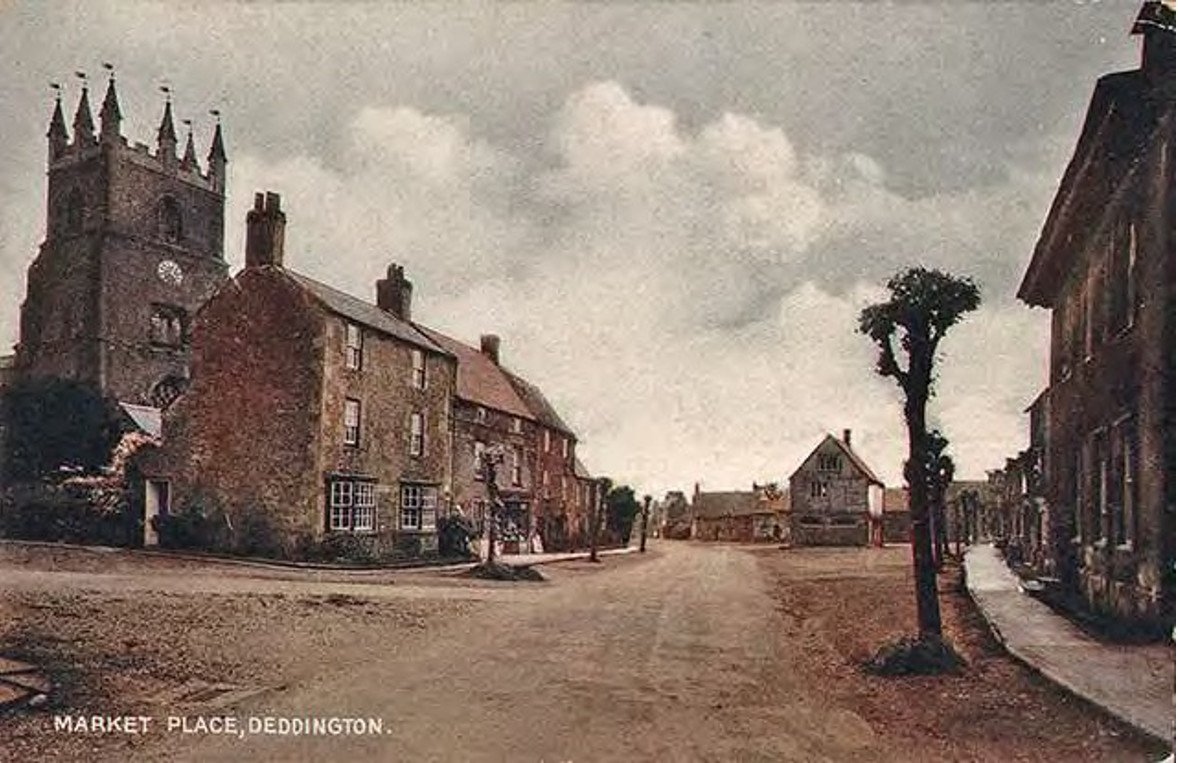
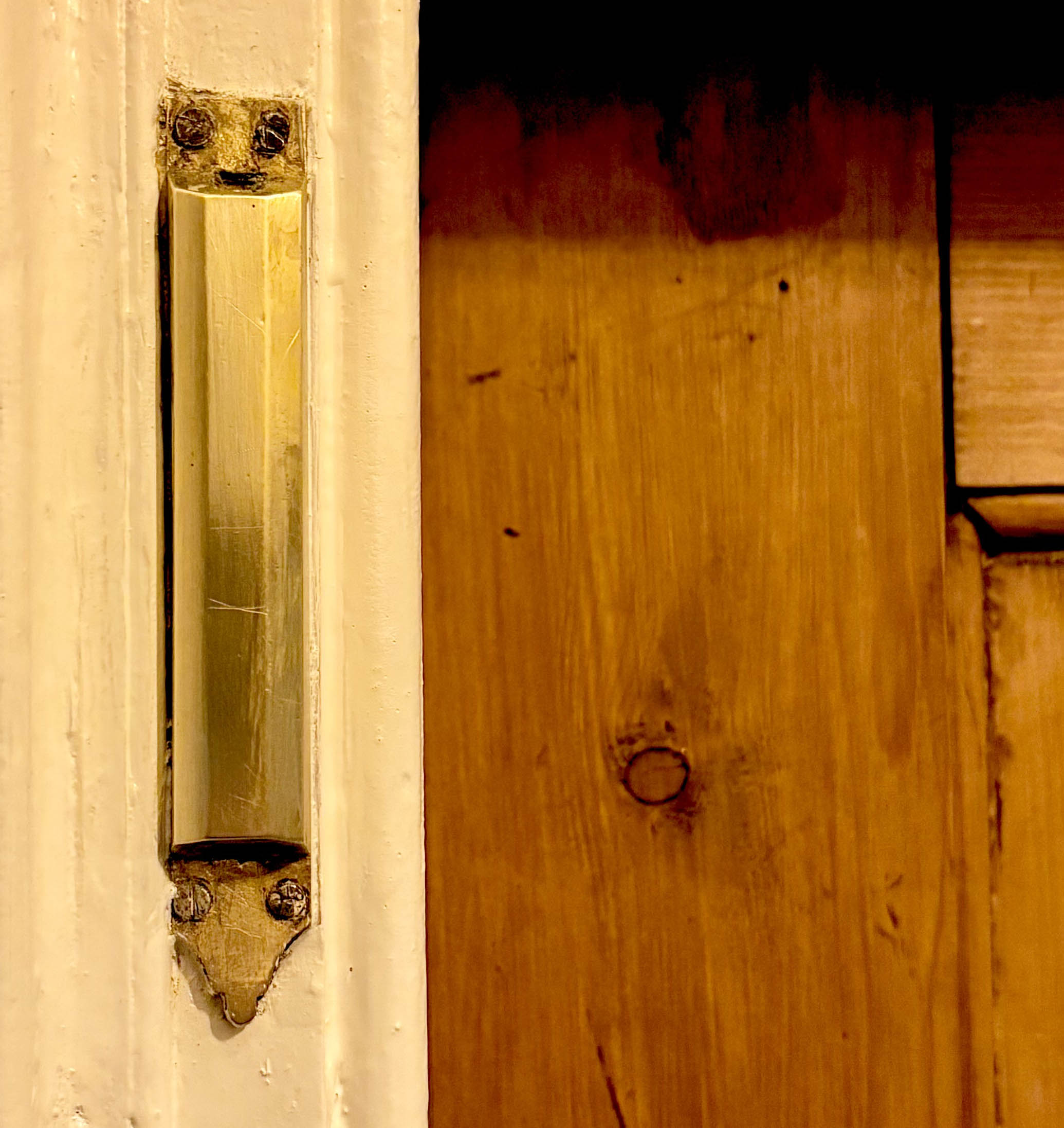
Mark Gandy (owner) uncovered a small mystery when renovating his house. Beneath layers of paint he found a 'Mezuzah' above a doorway. A Mezuzah is a Jewish tradition by which a small case containing a Hebrew scroll is fixed to door lintels so the Angel of Death knows to 'Passover' that property. Intrigued he decided to search for who of its previous owners might have placed it there. The results of his search were published in an intriguing article he wrote for the December 2025 edition of the Deddington News and a transcript is reproduced below.
click on images to enlarge
Several of the names/families are referenced elsewhere on this website so I have inserted links to them in the text.
It is also well worth reading the Heritage Report Mark refers to because not only does it trace the architectural heritage of Laurel House but also that of a number of surrounding buildings.
Several images ot the building over the years can be seen HERE
Yes, but whose mezuzah is it?
by Mark Gandy
 Being asked to pen something for the Deddy News is as flattering as it is intimidating. Waves of imposter syndrome roll over you, but never one to shy away from a challenge, here’s my offering. For those I’ve yet to meet, I’m the new guy in Laurel House—the one next to Eagles. Yes, the chap who painted those eyes while my windows were being hospitalised.
When asked what I might write, two villagers I respect suggested a canter through the social history of the house. Fair enough. It’s already well documented in the Heritage Report I had to commission for planning consent.
I like a mystery—and mine began while stripping the Pompeian layers of paint from an architrave. What looked like a defunct hinge revealed itself to be a mezuzah. For the uninitiated, a mezuzah is a Jewish tradition: a small case containing a Hebrew scroll, fixed to doorframes so the Angel of Death knows to Passover —geddit?—that property. Think ‘These are not the droids you’re looking for,’ but with more biblical gravity. Whose might it be? First stop was Brenda and Barry Haller. Brenda was intrigued but said it pre-dated them. So I dug deeper. Let’s see if you think I got close.
Records of occupants are patchy before 1851, the first census year. The fabric of the house has grown, and shrunk, since the first stones were laid in the early 18th century reflecting the fortunes and misfortunes and changing needs of the various occupants. The historic buildings survey identified five stages of development; growing an extra storey and also seeing the front door sliding from its original location on the front, Market Place elevation, to the side in the Bull Ring sometime in the 19th century and then back to the front again in the early 2000s, a continuing game of chase, especially for today’s courier companies given the postcode is linked to the Bull Ring.
The first confirmed owner was Alban Samman, a linen and woollen draper. Alban—the most Christian of names—and Samman, likely Arabic, make him an unlikely mezuzah candidate.1 Samman took on James Chislett as an apprentice. Chislett became partner, then family, marrying Samman’s daughter and taking over the business in 1883.
By 1880, George Coggins, solicitor, deputy coroner, and general Deddington luminary, had bought ‘The Laurels’ and lived there until 1898. After his neighbour, William Kinch from the Hermitage, fled Deddington in debt, Coggins seized the chance to it. His wife Mary, an invalid, died there only a year later in 1899; he followed in 1920.
It seems Coggins kept ownership but rented The Laurels to the Chisletts. The 1911 census records Emily Chislett and her daughter Kate living there. The Chisletts were well known in Deddington: James ran the drapery business in the Bull Ring until his death in 1897, leaving Emily with both family and shop to manage.
Her eldest son, Henry Samman Chislett (spot the naming tribute), expanded the business into funeral furnishings, rebranding it as H S Chislett’s Emporium—as featured in Jill Cheeseman’s September article (p.17) But by 1913 Henry’s business failed, blaming, in part, his brother William’s claims on their father’s estate. William set up a rival drapery on New Street, which also collapsed three years later, sold off to Chas H Ward of Banbury.
Then came The Laurels’ ‘Headmaster’s House’ era. First J and Beatrice Harmsworth lived there—he was head teacher at Deddington C of E School (hardly mezuzah material).2 He was succeeded by George Wing, ‘a younger man with new ideas from London,’ who’d arrived in 1942 when evacuated from Fulham together with his pupils. He stayed when the pupils returned.
George sounds to have been a character. As secretary of the Pig Club, he got first dibs on extra potatoes—dyed purple as unfit for humans—but still dumped them in the schoolyard for pupils to scavenge.
Later another George, who sounds even more of a character and, continuing the potato theme, was known to doss in the garage, when not sleeping in the church porch, and allegedly snaffled a week’s worth of chips when the van came round.3
So, back to that mezuzah. Despite being christened Marcus Damianus and of ‘the Latin persuasion’, my years in North-West London and New York gave me deep respect for Judaism, as well as resourceful contacts. So, in the spirit of Who Wants to Be a Millionaire, I phoned a friend and the first friend I chose, Debbie Taffler, was as intrigued as I and joined the hunt. Initially researching the Samman name and Deddington we found a link, via the Archer family website, to the Woolfs.4
It turns out a finger might point back to the Chisletts. In 1906, Emily Chislett’s daughter Margaret married Arthur Thomas Woolf. The Woolfs originally hailed from Königsberg—then Prussia, now Russia—and are Jewish. As Judaism passes through the maternal line it is, perhaps, a tenuous link but it’s the only one that fits.
And here’s the lovely small world twist of fate: Debbie’s synagogue stands opposite where Arthur’s father, Jacob, lived in London, and Arthur himself once lived across from her mother.
So the mezuzah may well have belonged to Margaret Chislett Woolf—and perhaps it has simply lingered, unnoticed, through every chapter since. Either way, it’s now back in place, quietly marking the threshold between the past and whatever comes next.
Marcus Damianus
mark@markgandy.com
Editor's notes:
1 A report of Alban's death with laudatory comments was placed in an 1855 Parish and Deanery Magazine - his name mispelt as Salmon.
2 Mr Harmsworth is referenced in Don Walker's WWII memories and Kellys' 1935 Directory which lists Mr Harmsworth living in 'The Laurels'. He is also referred to by Mary Vane Turner, George Harris and Fred Deeley - best to use word search within the references.
3 This is George Harper. He was referenced in a letter to the February 2001 Deddington News from Josephine Hawksley a visitor to Deddington. It contains a bit more detail about him. Also Shirley Jacob (née Newell) recalls "George Harper lived in the back of a garage behind the Post Office in the Bullring. He had bad legs & my Nan Newell use to care for his legs & give him food & that was early 60's & he finished his days in Lake House Adderbury." Mrs Newell lived in The Manse on the north side of the Bullring. Don Walker also told that George lived in the old and somewhat decrepit Windmill Cottages with his brother Mort until the cottages were knocked down in the early 1950s. George worked for Tom Lovel a farmer from Barford.
4 Another Mezuzah. Ruth Johnson in an article in the October 2003 Deddington News recounts how George Palmer received one and affixed it to the door post of the then Vicarage which was demolished in 1999.
Later occupants
1951 Mrs Ada Fuller. Occupied by her parents Christopher and Kate Wilkins.
1956 Let to USAAF from Upper Heyford and later let again to Brian and Audrey Fuller when they married.
1963 The Fullers moved into their owsn farmhouse on Victoria Terrace and the house was sold to ....?
1976 Used as commercial premises for Deddington Art and Craft Centre
1977 Deddington Antiques Centre Brenda and Barry Haller