Extract from Reginald's Book
Chapter 7. Page 121.
It is not known where Nathaniel studied law but he certainly practised as an attorney at law in Deddington and his signature appears on many legal documents of local residents as well as the family.
In 1738 an unexpected legacy changed his life completely. The Austin family were wealthy landowners in Hook Norton. One of them, George Austin, left a large farm and property to his children Antony, Anne and Mary. Anthony died without issue and Anne, who had married Henry Grey of Cavendish in Suffolk, also died without issue leaving her half share of the estate to her sister Mary. Now George Austin had an elder brother John whose son Nathaniel had a son John and a daughter Mary. It was this daughter Mary who married Nathaniel Apletree. In 1738 Mary Austin the · daughter, of George Austin, died and left the whole of the Hook Norton estate which she had inherited to Nathaniel Apletree in trust for his son Nathaniel Austin Apletree when he attained 25 years of age.
As usual when there was a likelihood of valuable property moving out of the possession of a family a legal battle erupted that lasted for two years. John Austin, Nathaniel Apletree's brother-in-law, contested the will claiming Mary Austin was not of sound mind and that the will was not properly witnessed and signed. When that failed he said that she had no power to dispose of the property in the first place.
Although Nathaniel succeeded in beating off this attack it was a costly process. In time his increased affluence enabled him to buy land and long leases. He also lent money on the security of property. One of these was outstanding and overdue at the time of his death and Mary would have foreclosed on Hugh Stilgoe's house in New Street had he not been able to borrow sufficient money from Nathaniel Jarvis of Deddington.
Nathaniel lived at Blunts[later Blounts] Farm in Deddington which he leased from Christ Church, Oxford at a rental of £4.6;8d.p.a., part of which had to be paid in corn. After his death in 1773 his widow Mary renewed it to 1793. He also rented the Plough Inn in New Street from the College.
Apletrees move away from Deddington
Nathaniel's children moved away from Deddington to Hook Norton and in subsequent generations to Leamington and Foleshill in Coventry, where they were handloom weavers. Reginald's book has no further mention of Deddington from Chapter 11 through to the end in Chapter 13. This suggests that Nathaniel's family ended their presence here. However William Wing (a 19th Century local historian) in his 'Supplement' writes "at this period (beginning of 19th century) the Apletree family continued to reside in Deddington as they had done for many generations—we find one of them alluded to in a sneering entry in the North Aston Register of Marriages "as a very great man in Deddington."At the same time one Richard Apletree created a rent charge of 6s. & 8d. yearly on two acres of meadowland towards the maintenance of the north aisle of the Church."
The mystery of Miss Apletree
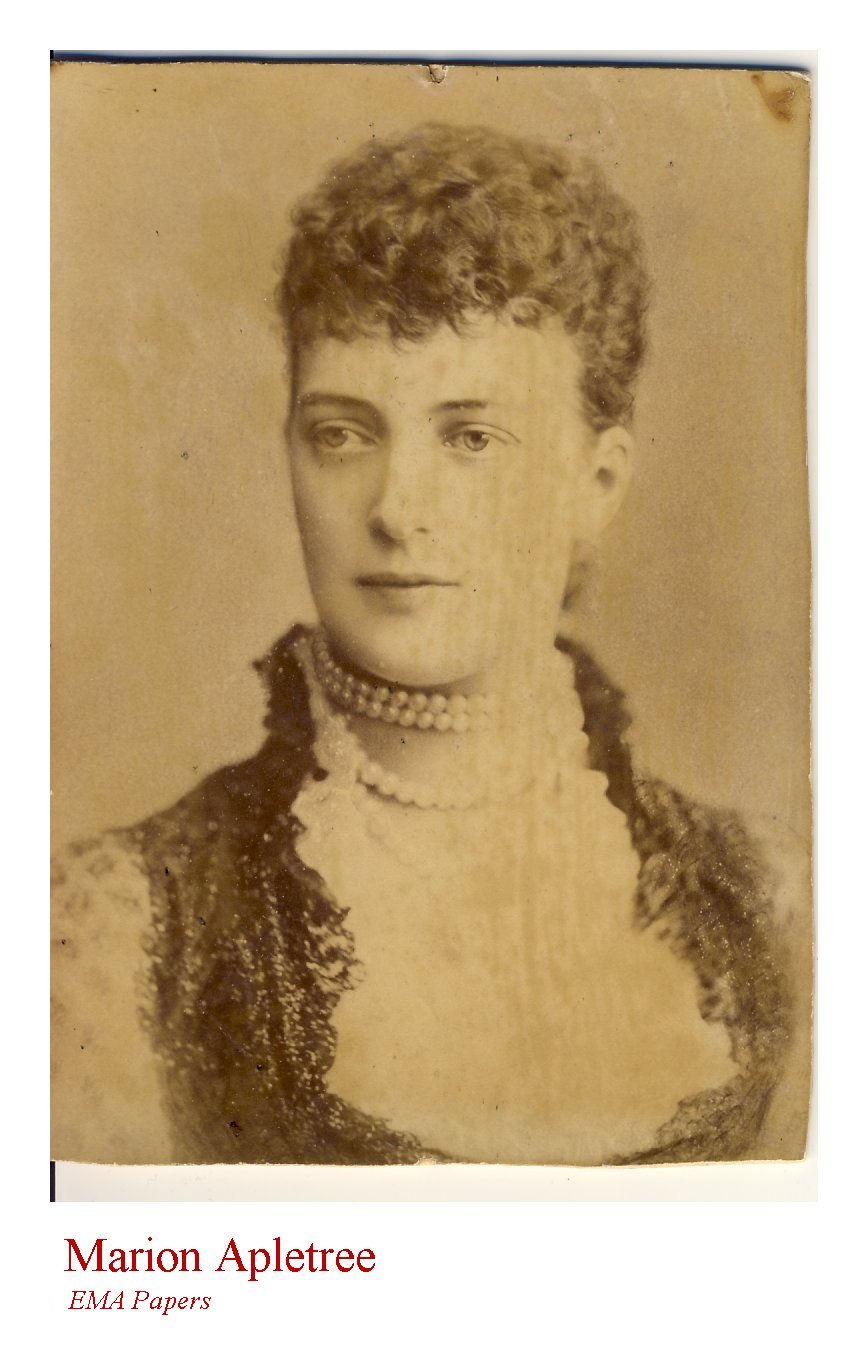
Mary Vane Turner in Chapter 3 of her Story of Deddington wrote "In 1879 the occupier was Mr. Thomas Gardner. Another farmer succeeded him named Simpson, who married a member of the well-known Appletree family, and it is significant that an 'A' is on the leaden pipe-heads."
BUT... there is no record of a Miss Apletree or a farmer Simpson in the 1881 through 1901 census and Ann Heymans advises " She never lived in Deddington, but in Basingstoke and, after marriage, in Devon. Her name was Marianne and she was born in 1843. She married Frances John Simpson in 1847. He was from Yorkshire." The 'A' on the leaden pipe heads Mary VT referred to will be the A's that Thomas put on them back in 1654.
Grave
Thomas died in 1773 and he is buried along with his wife Mary in the churchyard